
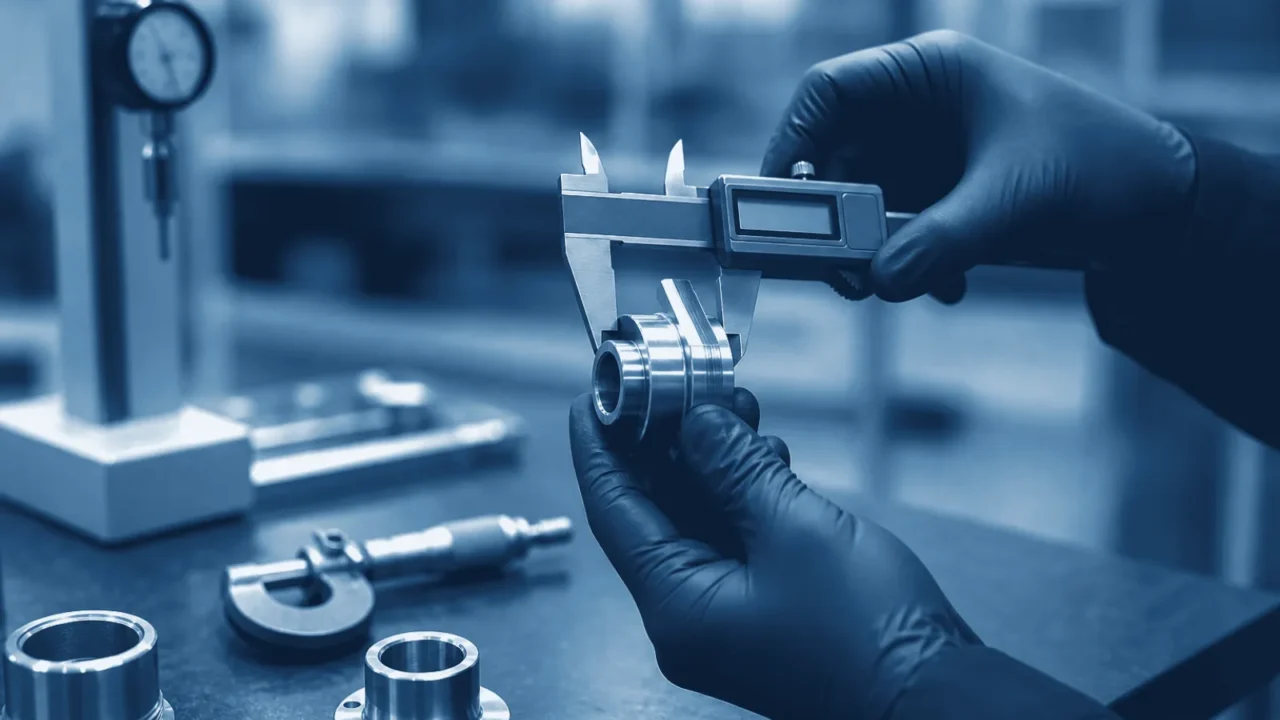
From Supplier Evaluation and Production Monitoring to Final Inspection and Continuous Quality Improvement
Introduction
Quality Problems in China Manufacturing Rarely Start at the Final Inspection Stage
Many international companies believe that quality problems happen because they selected the wrong factory.
In reality, most manufacturing failures begin much earlier:
- Incorrect supplier selection
- Unclear technical requirements
- Poor communication between buyer and manufacturer
- Lack of production monitoring
- Absence of standardized quality procedures
A final inspection can identify problems, but it cannot always prevent them.
Professional China quality control is not simply about checking finished products before shipment.
It is about building a complete quality management system throughout the entire manufacturing process.
A reliable quality system helps international companies:
- Reduce production risks
- Maintain consistent product standards
- Avoid costly rework and returns
- Protect their brand reputation
- Build long-term manufacturing partnerships in China
Quality Control in China Is More Than Product Inspection
Many companies approach quality control too late.
They find a factory, place an order, and inspect products only before shipment.
However, by this stage, quality problems may already have created:
- Production delays
- Additional costs
- Customer dissatisfaction
- Lost market opportunities
A professional quality management approach covers the entire manufacturing lifecycle.
The Three Stages of China Manufacturing Quality Management
- Before Production: Quality Planning
Quality begins before manufacturing starts.
Important steps include:
- Defining product specifications
- Preparing technical documentation
- Establishing acceptance criteria
- Selecting qualified suppliers
- Confirming production capabilities
Clear requirements reduce misunderstandings between international buyers and Chinese manufacturers.
- During Production: Process Quality Control
Quality must be managed during manufacturing, not only after completion.
Production monitoring may include:
- Raw material verification
- Production process checks
- Assembly monitoring
- Testing procedures
- Problem identification and correction
Early detection prevents expensive problems later.
- Before Shipment: Final Quality Verification
Before products leave China, companies should verify:
- Product quantity
- Appearance quality
- Functionality
- Packaging
- Documentation
- Compliance requirements
Final inspection is an important step, but it should be the final confirmation of a well-managed process — not the first time quality is checked.
The Real Cost of Poor Manufacturing Quality
Quality problems are not only manufacturing problems.
They become business problems.
Financial Losses
Poor quality may create:
- Reproduction costs
- Additional logistics expenses
- Supplier disputes
- Customer refunds
Brand Reputation Damage
For international companies, product quality directly affects customer trust.
One poor shipment can damage years of brand development.
Delayed Market Entry
Production problems may delay:
- Product launches
- Sales campaigns
- Distribution agreements
Management Time Loss
Company executives often spend significant time solving problems that could have been prevented through proper quality management.
Why International Companies Experience Quality Problems in China
Different Quality Expectations
One of the biggest challenges is that buyers and manufacturers may understand "quality" differently.
For example:
International customer expectation:
Premium surface finishing and strict consistency.
Factory interpretation:
Acceptable production standard according to local practice.
The solution is not simply better communication.
The solution is creating clear quality standards:
- Reference samples
- Technical drawings
- Inspection checklists
- Testing requirements
Communication and Technical Translation Problems
Many quality issues are caused by information gaps.
Problems often occur when:
- Product requirements are unclear
- Technical specifications are incomplete
- Changes are not properly communicated
- Production teams receive incorrect information
Effective quality management requires communication between:
- International buyers
- Engineers
- Factory managers
- Production teams
Lack of Production Monitoring
Many companies only discover problems after receiving finished goods.
A stronger approach is proactive monitoring:
- Check critical production stages
- Verify materials
- Review manufacturing progress
- Identify problems early
No Standardized Quality Procedures
Professional manufacturing requires systems.
Important elements include:
- Quality standards
- Inspection procedures
- Documentation
- Corrective action processes
Without these systems, quality depends too much on individual factory employees.
Common Quality Control Mistakes
Mistake 1: Inspecting Only Finished Products
A final inspection cannot fix problems created during production.
A better approach includes:
- Incoming material control
- Process inspection
- Assembly monitoring
- Final inspection
Mistake 2: Relying Completely on Factory Quality Control
Factories usually have their own internal QC systems.
However, factory quality control primarily protects the manufacturer's production process.
Independent quality management protects the buyer's business interests.
Mistake 3: Not Defining Quality Standards Before Production
Factories cannot consistently deliver expectations that were never clearly defined.
Before production, companies should establish:
- Product specifications
- Quality requirements
- Acceptance standards
- Testing procedures
Mistake 4: Selecting Suppliers Without Evaluating Quality Capability
A supplier may offer competitive prices but lack:
- Quality systems
- Experienced engineers
- Testing equipment
- International customer experience
Supplier evaluation should include quality capability assessment.
Our China Manufacturing Quality Framework
We help international companies build structured quality management systems in China.
Stage 1: Quality Requirement Definition
We help establish:
- Product specifications
- Technical requirements
- Quality standards
- Acceptance criteria
Goal:
Create a clear quality foundation before production begins.
Stage 2: Supplier Quality Assessment
We evaluate:
- Factory capabilities
- Manufacturing experience
- Quality systems
- Technical resources
Goal:
Select suppliers capable of meeting international requirements.
Stage 3: Production Monitoring
We support:
- Production progress tracking
- Quality checkpoints
- Communication between buyer and factory
- Problem resolution
Goal:
Identify and solve issues before they become expensive problems.
Stage 4: Independent Quality Inspection
Inspection may include:
- Quantity verification
- Appearance inspection
- Functional testing
- Packaging review
- Documentation verification
Goal:
Confirm that products meet agreed standards before shipment.
Stage 5: Continuous Quality Improvement
Long-term manufacturing success requires continuous improvement.
We help companies improve:
- Supplier performance
- Production processes
- Quality consistency
Factory Quality Control vs Independent Quality Management
Case Study: Managing Quality Across a Complex Multi-Supplier Production Network
Challenge
An international technology company wanted to manufacture an innovative modular product in China.
The production structure involved multiple suppliers:
- Engineering development
- Electronics production
- Metal components
- Internal systems
- Final assembly
The challenge was maintaining consistent quality while protecting technology and avoiding dependency on one manufacturer.
Solution
A structured manufacturing and quality management system was created.
The approach included:
- Supplier evaluation
- Component quality standards
- Separate supplier management
- Production coordination
- Final assembly control
- Quality verification procedures
Instead of relying on one factory, the production ecosystem was strategically organized.
Result
The company achieved:
- ✓ Consistent product quality
- ✓ Reduced manufacturing risks
- ✓ Better supplier control
- ✓ Protection of intellectual property
- ✓ Scalable production capability
This case demonstrates that quality control is not only about inspection.
It is about designing the right manufacturing structure.
Quality Control Also Requires Documentation and Compliance
For international companies, product quality includes more than physical condition.
Professional manufacturing requires:
- Technical documentation
- Testing records
- Quality reports
- Export documentation
- Compliance information
A reliable quality system protects both the product and the business process.
Why China Quality Management Requires Local Experience
A checklist alone is not enough.
Effective quality management in China requires understanding:
- Manufacturing culture
- Supplier behavior
- Production processes
- Local business practices
- Communication methods
With more than 20 years of experience working with Chinese companies and international businesses, we understand both perspectives:
International customers who require reliable standards.
Chinese manufacturers who operate within local industrial ecosystems.
This allows us to create practical solutions instead of simple inspection reports.
How We Help International Companies
Our support includes:
Supplier Quality Assessment
Evaluating manufacturing partners before cooperation.
Production Monitoring
Tracking manufacturing progress and quality standards.
Factory Communication Support
Bridging communication between international companies and Chinese manufacturers.
Quality System Development
Creating processes that improve long-term production reliability.
Problem Resolution
Supporting companies when quality issues occur.
Final Thoughts
Successful manufacturing in China requires more than finding a factory.
It requires a quality management system that connects:
- Suppliers
- Production processes
- Technical requirements
- Inspection procedures
- Business objectives
Companies that build this system can reduce risks and create reliable long-term manufacturing operations in China.
Quality is not something that should be checked only at the end.
Quality should be designed into the entire manufacturing process.
Build Your China Quality Management System Before Production Starts
We help international companies:
- ✓ Evaluate suppliers
- ✓ Define quality standards
- ✓ Monitor production
- ✓ Reduce manufacturing risks
- ✓ Build reliable supply chains in China