
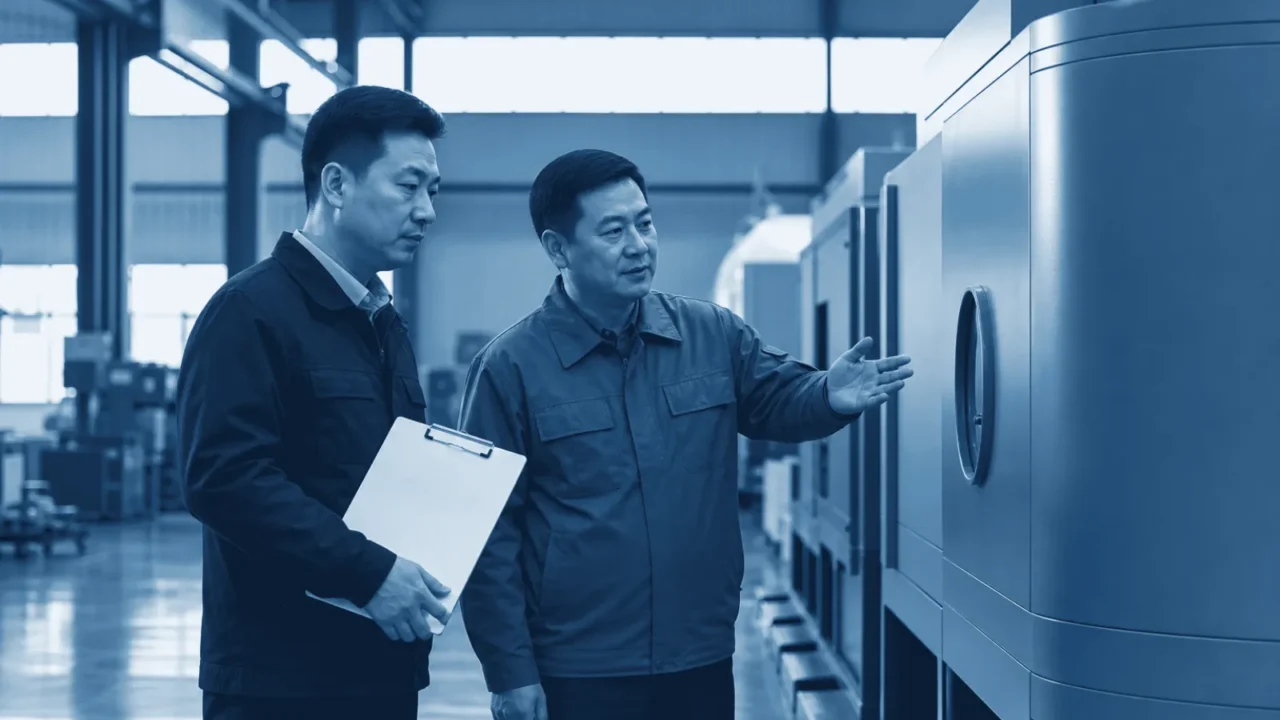
A Strategic Guide for International Companies Evaluating Chinese Suppliers, Factories and Long-Term Manufacturing Partners
Introduction
Finding a Chinese supplier is easy.
Finding the right manufacturing partner is the real challenge.
Today, international companies can find thousands of potential suppliers through online platforms, industry exhibitions and business networks.
However, a professional-looking supplier profile does not guarantee:
- Real production capability
- Stable product quality
- Reliable delivery
- International business experience
- Long-term cooperation potential
Choosing the wrong supplier can create serious business risks:
- Production delays
- Quality problems
- Unexpected costs
- Intellectual property exposure
- Damage to brand reputation
Successful companies understand that supplier selection is not simply a purchasing decision.
It is a strategic business decision that directly affects product quality, customer satisfaction and long-term competitiveness.
Supplier Search Is Not Supplier Verification
Many companies confuse finding suppliers with evaluating suppliers.
These are two completely different processes.
Supplier Search
Supplier search answers:
"Who can potentially produce my product?"
It focuses on:
- Finding companies
- Comparing prices
- Collecting contacts
- Requesting quotations
Supplier Verification
Supplier verification answers:
"Can this supplier reliably support my business growth?"
It evaluates:
- Company background
- Manufacturing capability
- Quality management
- Financial stability
- Export experience
- Communication ability
- Long-term suitability
A supplier may look attractive online but still fail to meet the requirements of an international business.
Professional verification reduces risks before significant investments are made.
Why Choosing the Right Chinese Supplier Is Difficult
China has one of the world's largest manufacturing ecosystems.
This creates enormous opportunities.
However, it also creates complexity.
A single product may involve:
- Multiple component suppliers
- Different production processes
- Various quality standards
- Complex logistics
- Different levels of factory capability
The challenge is not finding someone who can produce a product.
The challenge is finding a partner who can produce it consistently, scale with your business and meet international expectations.
Common Mistakes When Selecting Chinese Suppliers
Mistake 1: Trusting Online Supplier Profiles Without Verification
Online platforms are useful starting points.
However, profiles and advertisements do not always reflect reality.
Potential risks include:
- Inflated production capabilities
- Misleading factory information
- Lack of international experience
- Hidden subcontracting
Before cooperation, companies should verify:
- Legal company information
- Actual production location
- Manufacturing capabilities
- Previous customer experience
- Export history
Mistake 2: Choosing Suppliers Based Only on Price
Price is important.
But the lowest price is rarely the best business decision.
A supplier offering unusually low prices may have:
- Lower-quality materials
- Weak quality control
- Limited production capability
- Hidden additional costs
A professional evaluation considers the total business cost:
- Product quality
- Defect rates
- Delivery reliability
- Communication efficiency
- Management requirements
The cheapest supplier can become the most expensive mistake.
Mistake 3: Confusing Manufacturers and Trading Companies
Many international companies assume that working directly with a factory is always better.
This is not always correct.
A manufacturing company may provide:
- Direct production
- Technical capabilities
- Lower production costs
A professional trading company may provide:
- Access to multiple factories
- Supplier management
- Quality coordination
- Export experience
- Project management
The right choice depends on:
- Product complexity
- Order volume
- Business objectives
- Required level of support
The key is not whether the company is a factory or trader.
The key is whether the partner can deliver reliable results.
Mistake 4: Skipping Factory Audits
A factory visit or professional audit can reveal information that cannot be discovered online.
A proper factory evaluation examines:
Production Capability
- Equipment
- Production lines
- Manufacturing processes
- Capacity
Quality Systems
- Inspection procedures
- Testing methods
- Quality documentation
Management Capability
- Organization structure
- Production planning
- Problem-solving ability
Business Reliability
- Company history
- Customer references
- Export experience
Mistake 5: Ignoring Communication Quality
Communication quality is often an early indicator of future cooperation problems.
Reliable suppliers usually demonstrate:
- Clear communication
- Fast response
- Transparency
- Ability to solve problems
Poor communication during the negotiation stage often becomes a bigger problem during production.
International cooperation requires more than technical capability.
It requires mutual understanding and professional communication.
10 Red Flags When Evaluating Chinese Suppliers
- The supplier cannot clearly explain the production process
- The supplier avoids factory visits
- The company information changes frequently
- The supplier has no international customers
- The price is significantly below market level
- The supplier cannot provide quality documentation
- The company outsources all production without transparency
- The supplier cannot explain production capacity
- Communication is inconsistent or unclear
- The supplier focuses only on price instead of long-term cooperation
These signals do not always mean a supplier is unreliable, but they require additional verification.
Our China Supplier Verification Framework
We use a structured evaluation process to reduce supplier risks.
Stage 1: Company Background Verification
We analyze:
- Company registration
- Ownership structure
- Business history
- Industry experience
Goal:
Confirm that the supplier is a legitimate and stable business partner.
Stage 2: Manufacturing Capability Assessment
We evaluate:
- Production facilities
- Equipment
- Technical capabilities
- Production capacity
- Engineering resources
Goal:
Understand whether the supplier can actually deliver the required product.
Stage 3: Quality System Evaluation
We review:
- Quality control procedures
- Testing processes
- Certifications
- Production standards
Goal:
Ensure consistent product quality.
Stage 4: Business Compatibility Assessment
We analyze:
- Communication ability
- International experience
- Management approach
- Long-term cooperation potential
Goal:
Find a supplier that fits your business strategy.
Stage 5: Trial Production and Validation
Before large-scale production, we recommend:
- Sample testing
- Pilot orders
- Production validation
- Quality confirmation
Goal:
Identify potential problems before scaling.
Beyond Supplier Verification: Building a Reliable Supplier Ecosystem
For complex products, depending on one supplier may create unnecessary risks.
A stronger approach can include:
- Multiple specialized suppliers
- Separate component sourcing
- Controlled assembly processes
- Independent quality management
This approach can improve:
- Flexibility
- Technology protection
- Supply chain security
- Scalability
Successful manufacturing in China is often not about finding one factory.
It is about designing the right industrial ecosystem.
Case Study: Creating a Multi-Supplier Manufacturing Network in China
Challenge
An international technology company needed to develop and manufacture an innovative product in China.
The company wanted to use China's manufacturing advantages while protecting proprietary technology.
The main risks were:
- Technology exposure
- Dependence on one manufacturer
- Limited production flexibility
Solution
A distributed manufacturing structure was created.
The production system included:
- Engineering development
- Separate electronics suppliers
- Independent hardware manufacturers
- Specialized component suppliers
- Controlled assembly and packaging
Instead of providing the complete solution to one factory, production processes were strategically separated.
Result
The company achieved:
- ✓ Better intellectual property protection
- ✓ Reduced supplier dependency
- ✓ Flexible production management
- ✓ Ability to scale internationally
This case demonstrates that supplier selection is not only about choosing a factory.
It is about creating a secure and scalable business structure.
How We Help International Companies
We help companies move beyond simple supplier searching.
Our support includes:
Supplier Identification
Finding suitable manufacturing partners based on:
- Product requirements
- Industry
- Production complexity
Factory Verification
Evaluating:
- Manufacturing capability
- Quality systems
- Business reliability
Supplier Negotiation Support
Supporting:
- Commercial discussions
- Technical communication
- Cooperation structure
Manufacturing Setup
Helping companies establish:
- Production systems
- Supplier networks
- Quality control processes
Supply Chain Development
Building long-term solutions for:
- Stable production
- Risk reduction
- Business growth
Why China Supplier Verification Requires Local Experience
Online research alone is not enough.
Understanding Chinese suppliers requires practical knowledge of:
- Local business culture
- Manufacturing processes
- Industrial networks
- Negotiation practices
With more than 20 years of experience working in China, we understand both perspectives:
International companies looking for reliable solutions.
Chinese manufacturers and business partners.
This combination allows us to create practical solutions rather than simple supplier lists.
Final Thoughts
Choosing a Chinese supplier is one of the most important decisions for any company entering China's manufacturing ecosystem.
The right supplier can become a long-term competitive advantage.
The wrong supplier can create years of problems.
Successful companies do not simply search for factories.
They build reliable partnerships based on:
- Verification
- Strategy
- Quality management
- Long-term cooperation
Before starting production in China, make sure you are working with the right partner.
Request Your China Supplier Verification Assessment
Avoid costly supplier mistakes before production begins.
We help international companies:
- ✓ Identify reliable suppliers
- ✓ Evaluate factories
- ✓ Reduce production risks
- ✓ Build sustainable supply chains